It may come as a surprise for many people that one of the most notable Civil War naval battles took place in France...or just off the coast of France...on June 19, 1864. The CSS Alabama had been wreaking havoc on Union shipping for years, until mid-June 1864 when it entered the harbor at Cherbourg for repairs. Word of her arrival reached US forces and the USS Kearsarge set off for Cherbourg to destroy her. The story is a great one, and it is told well in this article:
I will let you read the details for yourself, but as it relates to classical music, I couldn't help but wonder if any of the thousands of people who watched the battle from the shore would perhaps go to a concert later that same day. Paris is about 300 km from Cherbourg, a pretty easy train trip even in 1864. Assuming the battle took place in the morning...I am not sure what time it did happen...any one of the spectators could have made it back to Paris for a concert. So I looked at the June 19, 1864 edition of Le Petit, a daily newspaper in Paris. Top of the list was a 7:15 pm performance of the Marriage of Figaro by Mozart.
What a day that could have been...to witness an historic Civil War naval battle, then be back in Paris for a production of Mozart's most well loved opera.
On another artistic note, the famous French painter, Edouard Manet, painted the battle. He was not witness to it, but he used descriptions from those who did witness it to paint this that same year. The picture now resides at the Philadelphia Museum of Art.
A few weeks ago, as the global pandemic was beginning to make itself known here in the US, my son learned that his baseball career was over. He played college baseball at Missouri Western University. This was his final year of collegiate baseball. He knew this was his final season, and he had made peace with that. He is ready to graduate in May and move on with his life. But no one, least of all him, saw things ending the way they did. It was not a hit nor walk nor strikeout...a win or a loss...it was a virus that brought his career, and that of thousands of other collegiate athletes, to an abrupt end. This was the end of a journey that started many years ago, in our backyard.
A little boy learning to hit a ball. This has been repeated millions of times since the invention of baseball in the early 1800's. Fathers...mothers...sons...daughters....a bat and a ball.
Baseball is a ruthless game. It is failure with small bursts of success sprinkled in. At every level, failure is the norm. Yet it is a game that we love none-the-less. And Jack took to it immediately and never let it go. From that time to now, it has been a big part of his life. I couldn't even begin to calculate the number of swings, ground balls, fly balls, etc etc he has taken and fielded. And of course there is weight training, film study, and team building.
There is also injury, disappointment, politics, and rivalry. The little boy above had surgery on his knee in 2016 and suffered life-threatening pulmonary embolisms afterwards. All for baseball.
I too have a few baseball scars...taking line drives off my chins that I could not block coming off his bat. Getting hit hurts! But we kept going.
To say I am proud of him is an understatement. Regardless of batting average or any other baseball metric, I am most proud of his dedication, resilience, and work ethic. And his sportsmanship. He gives back to others and uses his talent to lift others up.
I remember a time when he was in a slump and looking for anything to get out of it. It is a helpless feeling for a player to go from hitting everything the pitcher throws to not being able to hit anything!
He kept at it...kept grinding and trying...and finally he connected for a home run to break the slump. He signed the ball and gave it to me.
A couple of weeks ago, two things happened almost simultaneously that I knew I needed to write about. I got sick. I came down with a low grade fever, chills, and body ache. Earlier that same day, I was reading old newspapers and saw an advertisement circa 1888 about a belt that claimed to use voltaic electricity to heal a variety of illnesses and ailments, Electricity was a new revelation at the end of the nineteenth century and people explored the possibility that it could cure many of the diseases that inflicted many people. So later that night, as I crawled into bed and covered up in a super warm fleece blanket, Puma the cat followed me. This big blanket was covering part of my head and all my upper torso. The lights were out. Cheryl was sleeping in Ethan's room so I could have our bed to myself to try and get over this bug. I felt Puma take a stand in the middle of the blanket by my head and she started kneading her claws vigorously. She was also purring loudly. She leaned over me and her nose touched my nose. POW. A blast of static electricity cracked us. I opened my eyes. Puma kept kneading and I was treated to a laser light show of static "voltaic" electric all around this blanket. And....I kid you not....I started to feel better. This little cat somehow knew I didn't feel well. And she said, "just relax and let me take care of you old man." The sparks were green and yellow. They crackled. I fell asleep. and when I awoke, I felt better. A lot better. Coincidence? I think not. Puma's voltaic healing I say.
********************************************************************************
My latest listening project was the 16 string quartets of Dmitri Shostakovich...1-16 in sequence. It took me four days...so four per day! It rewired my brain for sure. DS is a legit genius. Conflicted, tormented, razor focused, yet open to exploration. comical, and dark. I noticed that Puma the cat was on edge after the first day. DS's tonality, voicing, and phrasing is world class. But it's not always so easy on the ears. It stimulates a response in the brain that triggers edginess. Unforgettable and clever. A great musical journey...highly recommended. and it requires more than one pass, so I will do this again soon.
*********************************************************************************
I landed on the music of Max Ricther last year when I wrote about his soundtrack for the movie Hostiles. Last week I heard On the Nature of Daylight for the first time on Sirius XM Radio. This comes from his album The Blue Notebooks. I almost had to pull off to the side of the road to compose myself.
On February 8, 1898, the French organist and composer, Alexandre Guilmant gave a recital in Kansas City as part of his tour of the United States. This recital took place at the Grand Avenue church. Guilmant had a long, distinguished career as a performer, composer, and teacher. He lived from 1837 to 1911.
Here is the review of his performance in Kansas City published in the February 9, 1898 Kansas City Journal:
Here too is a wonderful piece of music composed for Organ by Guilmant. Enjoy!
I've had the pleasure of seeing Pinchas Zukerman perform a number of times, going as far back as the mid-70's when I saw him for the first time...he was playing the violin as a soloist. But he is also a conductor, and a virtuoso violist as well. In addition to playing the "standards" of the violin-viola concerto repertoire, he has also distinguished himself as a fine chamber musician. If you watch any number of interviews and documentaries about him, what stands out to me is his love of making music WITH other people...not FOR other people. He loves being "in the band" so to speak. The spotlight of the concert stage is not what he seeks...he would rather be part of a group effort. And Saturday night, watching him perform the Beethoven Violin Concerto in D with the Kansas City Symphony...that's exactly how it felt. Sure, he was the star...we all came to see him play the Beethoven...but he blended into the orchestra and made it feel like a group effort, even though he was doing the heavy lifting. Beethoven's Violin Concerto was premiered in 1806, and was not well received. Imagine that...this seminal work got off to a very slow start. But tonight, everyone in Helzberg Hall probably already knows and loves this concerto. Along with Mendelssohn, Tchaikovsky and Brahms, Beethoven is on the Mount Rushmore of violin concertos. And the concerto starts with? That's right, 4 "d's" tapped on the timpani, followed by a rather lengthy orchestral introduction...over three minutes. So rather than just standing there waiting for his entrance, Zukerman jumps in with the second violins and plays with them...a man who loves being part of the band. And when it's time for the solo violin to enter, he steps forward and takes the hand-off from Maestro Stern and off we go. My mom asked me how many times has he played this concerto in his career.. I don't know...probably hundreds...but the great thing about him, and this concert, was his eagerness to make music. He was engaged, enthusiastic and alive. How does Billy Joel manage to play Piano Man with any enthusiasm after playing it thousands of times? Not sure...but Zukerman seemed to be having fun. When he reached the cadenza of the first movement, his true genius was obvious. The woodshed had velvet walls. The technical nature of the work was visible to the eye, but the resulting music was simply beautiful to the ear. Leaning into the cadenza, he swayed, and shimmied. all under the watchful eye of Stern,who did a wonderful job keeping the balance and guiding the attacks and phrasing for everyone else. And here's what Zukerman does that many if not most violinists can't do...and this is true of singers...he can be "loud" when he plays softly. I don't know how to explain this very well...but when he plays quietly and delicately, the music does not lose its power nor force. And when he does play at full volume, it is such a great contrast to his pianissimo. There were continued smiles throughout the performance, intentional eye contact with Stern and other musicians, and an obvious love and respect of this timeless music. After making his debut as a child prodigy some sixty years ago, the kids is still alright.
There was other music this evening as well. I am a huge Janacek fan...how many of you can honestly say that? I have probably listened to his Sinfonietta and Taras Bulba a hundred times. And his piano work On an Overgrown Path is also a big favorite of mine. But I had never heard The Fiddler's Child before this week. (I listened to it in advance of the concert.) What a great work! It has the same rhythmic pulse and chordal style of Taras Bulba, and a very tasty violin solo played with great tone and taste by guest concertmaster, Joseph Meyer. I listened to it again today because I am hooked!
And speaking of hooks...musical hooks...there was also Mozart's Symphony no. 39 this evening. Once again, the KCS played Mozart with finesse, crispness and most importantly, ENERGY. It seemed like Maestro Stern and the Band were having fun. Mozart sets so many traps for you as a musician. First off, there are the repeats and sudden stops that make you hold your breath that no one will blow through a stop sign and play in a rest. No one did. But much more importantly, as great as Mozart is, a blase', uninspired Mozart is a real drag. If you are going to do it...than DO IT. KCS brought their A-game tonight and brought Mozart to life. Cheers!
I may have mentioned before that I no longer listen to music when I run. I used to. About ten years ago...maybe even eleven or twelve, I was running the Omaha Marathon and I had an iPod loaded with songs. By then my eyesight was at the point where I needed glasses to see the display, and I didn't like to wear them while I ran. So anytime I wanted to make any adjustments, it was a struggle. And on this particular day, something was not working with the iPod and I had to stop multiple times to try and get it figured out. It was hot this day too, and sweat kept pouring all over my head and into my eyes and ears. The headphones kept falling out of my ears, and the chord was constantly bouncing about, getting in the way of my arm swing. And for some reason, the music I had loaded wasn't making me happy for whatever reason. I'd start a song and about a minute later, I wanted to forward it to the next song, but the next song didn't cut it either. I finally got so frustrated, I just ditched my mobile sound system in a bush and said "fuck it." I was left with the sound of my breathing and my feet hitting the road. It was better than any music that day, and I have not used music while running since. But that does not mean there isn't music in my head...there is. I have the ability to sing or hum a tune as I run...mostly to myself, but occasionally aloud. There was the time I was running a marathon and I must have been singing aloud and as I came up on another runner who looked around as I approached and said "do you think you could get any fucking louder?" (OK, so that's twice now I have cursed here....so be it). Anyway, I chalked that snarky comment up to the fact that she was probably suffering as we all do during a marathon, but I must have sounded too happy. And I was cruising pretty well at that point and that added to her displeasure. So I try to keep the music in my head. Any kind of music will do, but short phrases or segments of songs or symphonies work best...and I repeat them over and over. Today, on my six mile run, it was the ending of She's So Heavy by the Beatles, from the Abbey Road album in my head. I'm talking about the five bar phrase that is repeated over and over at the end.
But then I switched to the song Opening by Philip Glass. This is from his 1981 album called Glassworks. Glass is a great composer, and this album fits into the genre often called Minimalism. A simple, short musical idea or phrase is repeated over and over, sometimes with small variations, and sometimes with out any. I got this album when it was first released and it has long been a favorite of mine, regardless if I am running or sipping a bourbon.
Erik Satie may be the Godfather of minimalism. Some of his compositions are very short or singular musical phrases that are repeated over and over. Here is one of my favorites that is a great running tune:
The rolling arpeggios create nice forward motion in my mind which then translates to my legs as I run.
I have probably used a melody line from every composer at some point on a run. Dvorak, Beethoven, Bruckner, Bach, Chopin....and on and on. That's how I do it. No headphones to mess with, no device to carry, charge or protect from the elements. Ditching the outside music that day back in Omaha was the best thing I ever did.
I traveled to Orlando for work this week. Flying offers wonderful people watching opportunities. I try to keep a positive attitude while observing my fellow humans, but let me get some of the negatives out first. Sick people. I was stuck next to a family with two small children on the flight down. The girl must have been 5-6 years old, and she coughed and hacked and wheezed the entire flight. The dude in front of me also was clearly sick and could not stop coughing and sneezing. I understand that we have places to go and things to do. Most of us go about our lives even if we have a cold or some respiratory infection. But when you are trapped in an aluminum tube with crappy air, your germs have a field day I think infecting others. It's no wonder we have epidemics.
People talk on their phones at the top of their lungs, sharing their shitty conversations with everyone within 50 feet of them. The worst offender was a young lady at the Kansas City airport who was talking on speaker phone without any awareness that she was disturbing everyone around her. I looked at her and she noticed me. I kept my gaze and shook my head disapprovingly and walked away. I didn't want to be a complete douche and confront her directly, but I was pleased that I made some attempt convey what the rest of us for whom she had no concern were feeling.
Bravo once again to the Orlando airport. I had a two hour wait there and was treated to classical music the entire time on the overhead sound system. Why an airport needs to play music of any kind makes no sense to me. Most everyone else has their earbuds in listening to their own music or podcast or watching a movie or show. But I appreciated the Beethoven String Quartet and the Mendelssohn Symphony all the same...I listened. When I got to Atlanta, I was greeted with the worst "smooth jazz" mashup imaginable. It was loud and it was distracting. I love jazz, and have expressed that many times here. This was prefabricated, mindless, studio session bullshit. Your music sucks Hartsfield International.
I met an Uber diver named Abdi who was born in Somalia, and was forced to move to a refugee camp in Kenya when he was one. His family lived in the camp for years before he was allowed to come to the United States. His description of life in the refugee camp has horrifying and heart breaking. I can't imagine what it would be like not being able to live in my home country, to have to walk many miles to a different country and live in a tent without any security or protection, and lack basic needs like water, food and sanitation. He said the Kenyans did not want the Somali people to be there, and the camp guards were corrupt and violent. His father was killed. Luckily, he was granted asylum in America and came to KC with his mother, and two sisters. He now is a US Citizen, has a wife who is a nurse, and two young children. He expressed a profound sense of gratitude for the opportunity to come here and he had an infectious, positive outlook. It was very humbling for me, a person who has lived a life rich in material things, security, freedom, and an abundance of food and water.
I started writing this online journal...or Blog...in February of 2014. I must say, I am immensely proud and satisfied with what this has become. Writing continues to be a source of pleasure and happiness for me. I wish I had more time to write. It's not always easy, and I don't always write very well....but hey, that's OK too. I don't always write about classical music either...I branch out...take journeys into other areas...history and philosophy for example. But, regardless, it is genuine, and from my heart. It is honest and authentic. It is me. Hello 2020, I am looking forward to what you have in store for me.
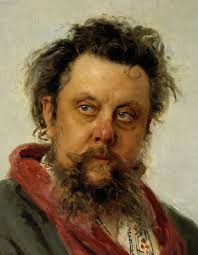
In early December, I had another one of those moments when I heard a piece of music while I was in the car... I knew what the piece was...Mussorgsky's Pictures at an Exhibition (1874)...but in this case, it was the original version for piano, and I wanted to know who was playing it. Maurice Ravel orchestrated Pictures in 1922, and this is what most people know. I have talked to many people who have never even heard the piano version, and as incredible as Ravel's work is, the original work is equally stunning. On this occasion, the recording I was listening to was even more mesmerizing than any other I have heard. And of course, I arrived home before it was over, so there I sat in the garage for at least fifteen minutes, waiting for it to end so I could hear who had recorded it. The answer was Alice Sara Ott. Mussorgsky had a very tragic life. I read some letters of his that described his descent into alcoholism and eventual death that was equal parts fascinating and sad. The picture above (1881), was painted a few days before he died, and captures the red nose and vacant stare of a chronic alcoholic at death's doorstep. But in his Pictures at an Exhibition, there is so much life...breathtaking melodies, humor, fear, and triumph. Ott's recording is the best I have heard.
I stumbled upon another work of Mussorgsky this month that I had never heard...The Songs and Dances of Death for Soprano and Piano. I find these haunting and beautiful...sometimes playful and light...but mostly heavy and dark. I love them! Take a listen. I am curious what you think of them.
My resolution this year is to talk about LOVE. Despite the sadness and grief around us....the fighting and arguing...the negativity and anger...I do believe that LOVE is the answer. I believe in God's LOVE and GRACE. But I have dear friends and family members who don't believe in God...and that's OK with me. They too have LOVE in their hearts. LOVE is LOVE. Spread it. "I LOVE you" is the best thing you can tell someone. Say it.